Categories
What types of PPC automation are there?
Not all automation does the same job. Most PPC tools and features fall into one of four categories.
1. Platform-level automation for Google Ads and Microsoft Ads
This includes automated bidding, query matching, and asset selection. These systems decide how ads are shown and who sees them, based on defined goals and available data.
They’re always on and operate at scale, but provide limited visibility into individual decisions.
2. Bulk update tools like Google Ads Editor and Microsoft Ads Editor
Both ad platforms offer these free applications. They’re helpful when creating or updating campaigns, ad groups, or keywords in bulk. However, they’re designed for bulk creation and editing, not optimization.
3. External scripts
A PPC automation staple, scripts carry out specific tasks in your PPC account. Setup, maintenance, and troubleshooting usually require some coding experience.
4. Conversational AI tools
ChatGPT, Claude, and Gemini can help automate particular tasks, like drafting ad copy or interpreting data.
As they don’t have direct access to ad accounts, this type of tool can’t monitor accounts or act in real time. Finding the right prompts and contextual information also needs experience.
5. Third-party PPC automation software
Platforms like Adalysis combine monitoring, prioritization, and automation in one workflow. This means they help PPC teams on several levels:
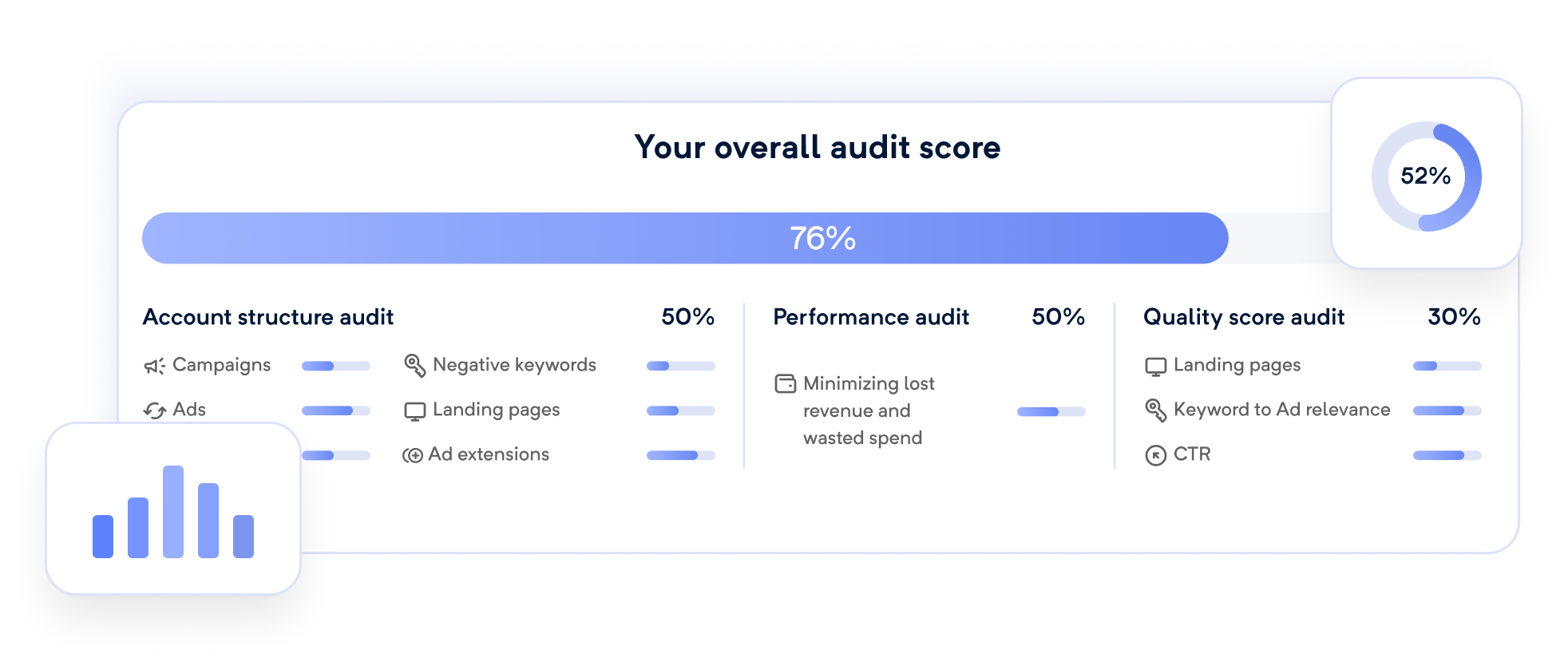
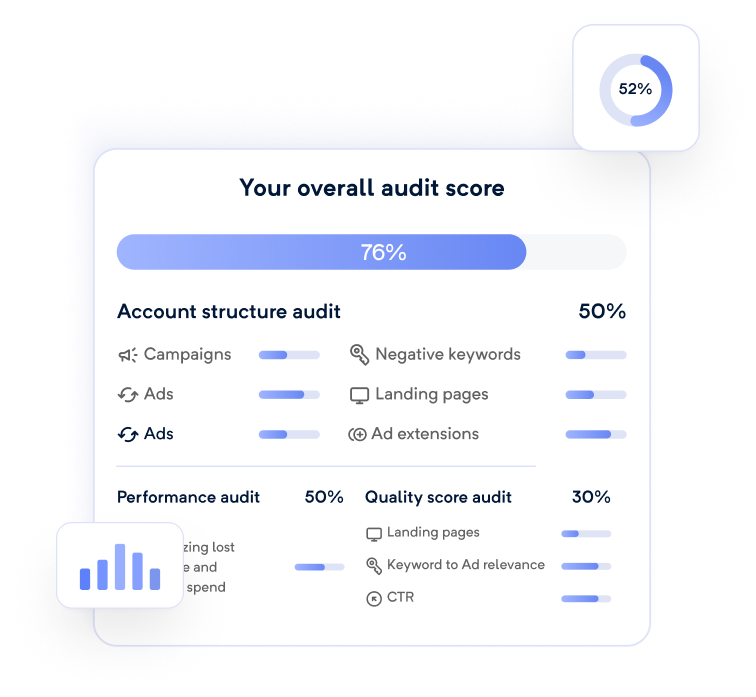
- Auditing accounts for critical issues, errors, and opportunities to optimize
- Monitoring accounts for sudden performance changes or budget issues
- Identifying what needs attention first and filtering out noise
- Rule-based automation for clearly defined tasks
It’s not about shrinking team sizes, but about making better decisions and guiding the ad platforms’ machine learning.
How third-party PPC automation tools fit in
Third-party automation can help you keep a watchful eye on:
- What’s happening in your account
- Where automation should apply, focusing on clear, low-risk actions
- Visibility and control as accounts scale
Adalysis, for example, focuses on automating straightforward actions. It highlights edge cases, and keeps humans involved where judgment is required.
And here are some examples of how this works in practice:
Audit: Adalysis covers over 100 audit checks by default. You can customize them and you can create your own additional alerts. Many teams save 3-5 hours per audit.
Ad testing: Adalysis automatically sets up ad tests for any ad group with two or more ads. You’ll get an alert as soon as a test has reached the threshold for statistical significance. And the test covers six metrics, incl. CTR, conversions, and more.
Performance monitoring: Create KPI monitors for the metrics that matter most for your accounts. Then, let Adalysis do the tracking for you and send you alerts for relevant changes. The Performance Analyzer shows you visually how your metrics have changed, as well as the major factors driving those changes.
Budget management: Our automated checks let you know when your campaigns start losing impression share due to budget. You can then shift budgets from the worst to the best-performing campaigns.
Optimization: Adalysis offers over 40 PPC optimization tools, covering the whole PPC workflow. It includes custom screens for keywords, search terms, ads, landing pages, and more. Time savings quickly add up when you have all the relevant data at hand in a single screen.
Quality score: Adalysis aggregates keyword-level data into account and ad group scores. Ad group scores are impression-weighted, so you can see easily where your time will have the most impact.
Here’s how the Adalysis team decides what to automate.
What should you look for in a PPC automation tool?
Used well, automation tools can deliver meaningful advantages. This includes time savings from automating repetitive checks and data-heavy reviews. Faster reaction time due to automatic monitoring and alerts. Process consistency from applying the same logic and settings across all campaigns, reducing human error.
To deliver these benefits, this is what we would look for:
- API access to your ad accounts. This enables automated monitoring and auditing without data downloads.
- Alerts for important issues, whether it’s a big performance shift, a budget issue or a critical audit error.
- An integrated workflow, so you minimize spend on multiple tools and don’t lose time switching between screens.
- Scalable pricing that doesn’t charge you more when you get a new team member or PPC account to manage.
- Automated processes that mean you can scale your PPC performance, not your workload.
How to stay in control
Automation tools are only as effective as the data and constraints behind them. They often struggle when:
- Conversion data is sparse or misleading
- Budgets are very constrained
- Campaign goals are poorly defined
- Performance depends on business context
- No one is reviewing automated decisions
In these situations, automation can confidently optimize toward the wrong outcome. That’s why oversight matters more than ever.
Find out more about how to build effective guardrails to protect your budget and performance.
Try Google Ads automation for yourself
Try Adalysis free for 30 days. No credit card needed, full support provided.
See for yourself how automation can help you manage Google Ads more efficiently, without losing visibility or control.
*Source: https://www.hubspot.com/marketing-statistics
Share around the web




Improve performance
with
actionable
analysis


Leave a comment