Categories
Are you fed up with seeing “landing page experience below average”?
In this article, I’m going to explain just how heavily weighted landing page experience is in the quality score algorithm, with the aid of big data case studies from WordStream, Adobe, and Adalysis.
I’m also going to walk you through 10 critical factors that you need to achieve an above average landing page experience.
Where does landing page experience fit into quality score?
Landing page experience plays an important part in the quality score algorithm. A former Googler, Fredrick Vallaeys drew this diagram explaining how the different factors are weighted towards the overall quality score.
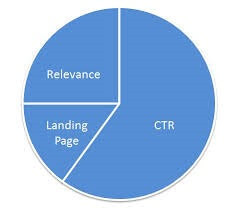
A recent Adalysis study, which analyzed a significant amount of data from a number of different industries, concluded that the exact weighting of landing page experience was 39% of the overall quality score equation.
However, research by WordStream and Adobe suggested that on a grand scale there is a direct correlation between CTR and quality score. That would suggest that landing page experience may play less of a part within quality score than the Adalysis study suggested.
This may however be due to a few possible reasons.
- The studies by WordStream and Adobe were conducted over 3 years ago and Google may be placing more weight on landing page experience, which is the opinion of many thought leaders in the area. This rising importance of landing page experience and declining weight on CTR would be in line with Google’s overall plan to provide a good user experience, on the SERP but also post-click when they arrive at a landing page.
- The quality score that you see in Google Ads (that Adalysis based their data on) is based on a pass fail test. There may be a sliding scale that Google uses to determine quality score. There may be very little correlation between the three quality score indicators and the numerical quality score displayed within Google Ads.
- The correlation may be explained by the fact that people who have high CTR are likely to have a good understanding of landing page experience, because they already understand how to display and write highly relevant adverts. They’re therefore likely to know how to create high quality landing pages that provide a good user experience.
There is some difference in opinion as to how much weight landing page experience holds. But there is no question that it is an important factor within the quality score algorithm. It may result in a quality score increase of 1 -2 points, which could reduce your overall cost per click by 28.6%.
What factors influence landing page experience
There are four main categories that determine your landing page experience according to Google.
- Relevant, useful, original content
- Transparency and trustworthiness
- Ease of navigation
- Site load speed
Lets look at each of these elements individually to see what can be done to optimize them.
Perfecting your advert to landing page match
Step 1. Make sure that the headline of your advert matches the headline of the landing page.
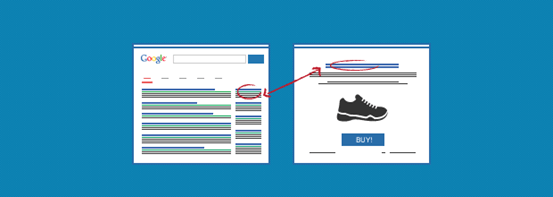
This is to ensure that users find exactly what they’re looking for when they reach your website. Online you have 5.59 seconds to capture the user’s attention, so don’t make them look around. Otherwise, they’ll be hitting the back button and going to your competitors.
It’s also worth including relevant keywords within your page and following SEO on-page best practices.
Step 2. Provide all the information that a user needs to complete a conversion on the landing page. This is going to vary widely depending on the website and what you’re selling. There are many methods of determining this including surveying your customers, reviewing live chat scripts for commonly asked questions and talking to your sales people.
Step 3. Get rid of any duplicate content on your landing pages and website in general, which you can identify with free online tools. Once you’ve found it, you need to replace it with your own unique content.
Improving your transparency and trustworthiness
This is all about showing that your website is authentic and that there is a real company behind it.
Step 1. Ensure that your contact details are easy to find and the companies registered address is placed on the website and there is a link to it on every page of your website.
Step 2. If you request information from website visitors then ensure that you have a page outlining your privacy policy page, and that you link to it from every page of your website in the footer. If you’re not legally minded, then there are several companies that will generate one for you online for free.
Step 3. Ensure that your website has an about us page that shares information about the purpose of your business.
Ease of navigation
Step 1. Make it easy for people to enquire about your service or order your product. Take people directly to the product or service that was talked about in your advert. Include call to action buttons that allow users to purchase your product if they are landing on a product page. Or make it easy for users to find out more information about individual products if they land on category pages.
If you’re using Google Ads to generate leads for your service, consider including either a button leading to your contact us page, on the page that customers land on. Alternatively, you could use an enquiry form on the landing page like Market Makers below.

Step 2. Ensure that users can find out all that they need about the advertised product or service. This first and foremost starts with a good description of the product, but should extend further to including other relevant information. For example, a clothes retailer may want to highlight their returns policy. Or a size guide to help you choose.
Load speed
Load speed has also been factored into the quality score algorithm, as keeping people waiting while your website is loading constitutes a poor experience.
It’s especially important for mobile devices, which account for over 50% of Google searches and which tend to depend on slower internet connections.
Step 1. Determine your landing page load speed using this free tool.
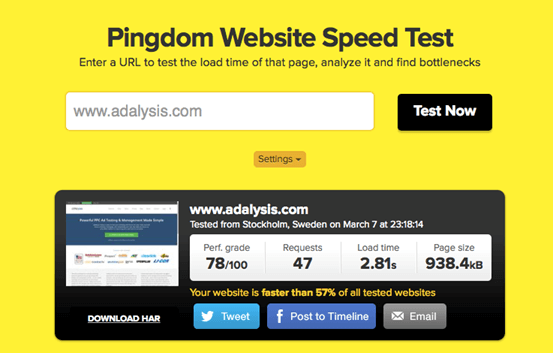
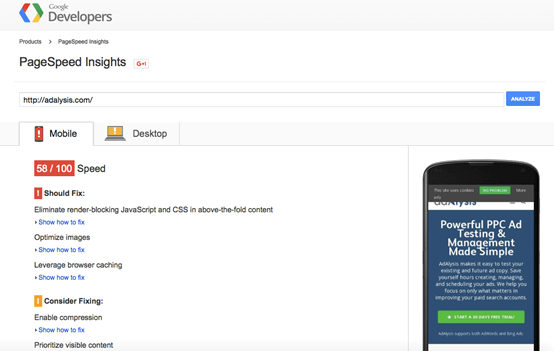
Step 2. If your landing page load time is slow, then use Google page load insights tool to find suggestions on improving your speed, for both mobile and desktop devices.
Wrap-up
It’s clear that landing page experience plays an important part in the quality score algorithm. It makes sense to maximize the user experience on your landing pages, to get the best ROI from your paid search campaigns.
Following the 10 steps set out in this guide will get you well on your way to improving your overall quality score and seeing “landing page experience above average” more often.
This is a guest post by Wesley Parker.
 Wesley is a an expert paid search marketer with over 5 years experience. He regularly contributes to the Clicteq blog and is available to hire to manage your paid search campaigns.
Share around the web



Scale your PPC performance,
not your workload.


Leave a comment